Flamenco dance originated primarily in the Sacromonte neighbourhood of Granada, particularly within its cave dwellings, from the 16th to 18th centuries. It emerged from the fusion of Romani (gypsy) traditions with Andalusian, Moorish, and Jewish cultures, often centered around the zambra.
Key Origins and Locations in Granada:
-
Sacromonte Neighbourhood: Known as the traditional "gypsy neighbourhood," this hilly area overlooking the Alhambra is considered the epicenter of flamenco in Granada.
-
Cave Dwellings (Cuevas): The marginalised Romani community lived in caves excavated into the hills. These caves became natural amphitheaters, where intimate, passionate performances known as the zambra were born.
-
Zambra Gitana: A unique, intimate form of flamenco associated with weddings, which heavily influenced the Granada style.
-
Artists like María la Canastera turned their own caves into performance spaces, a tradition that persists today in spots like the .
Sacromonte remains the most famous area to witness this authentic cave flamenco, deeply intertwined with the region's history of marginalisation and cultural expression.
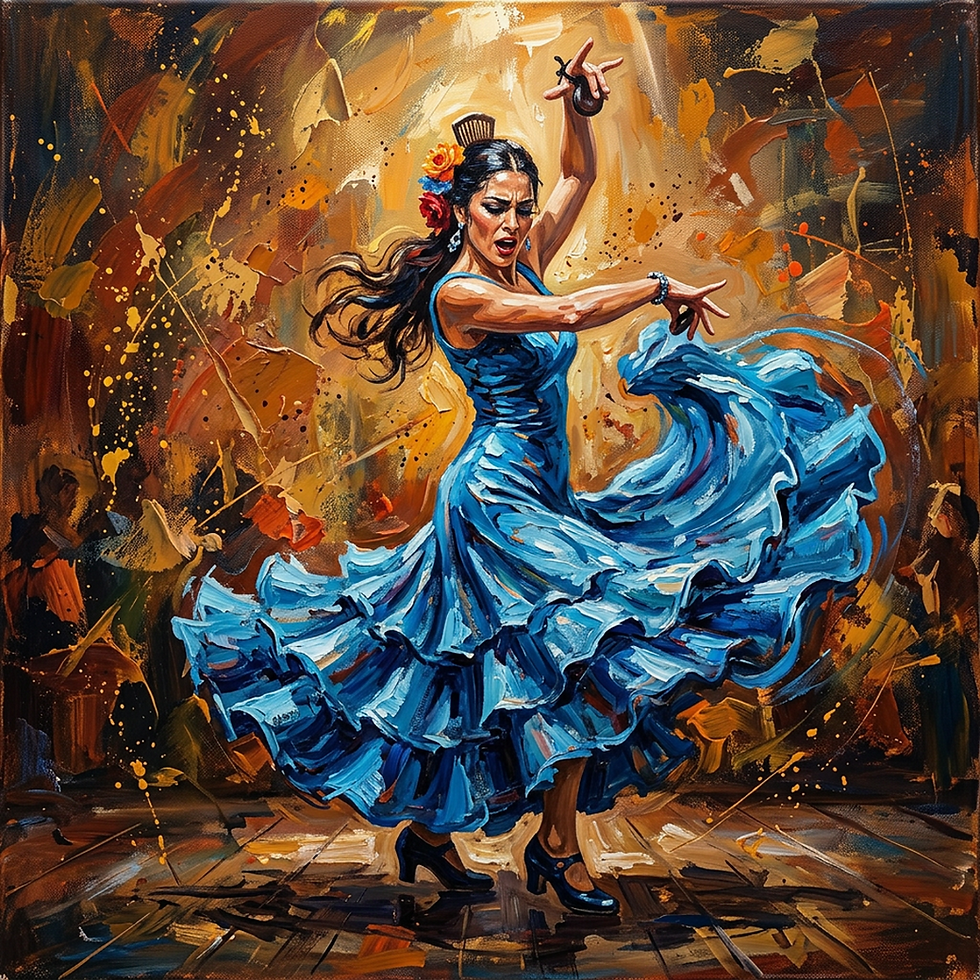
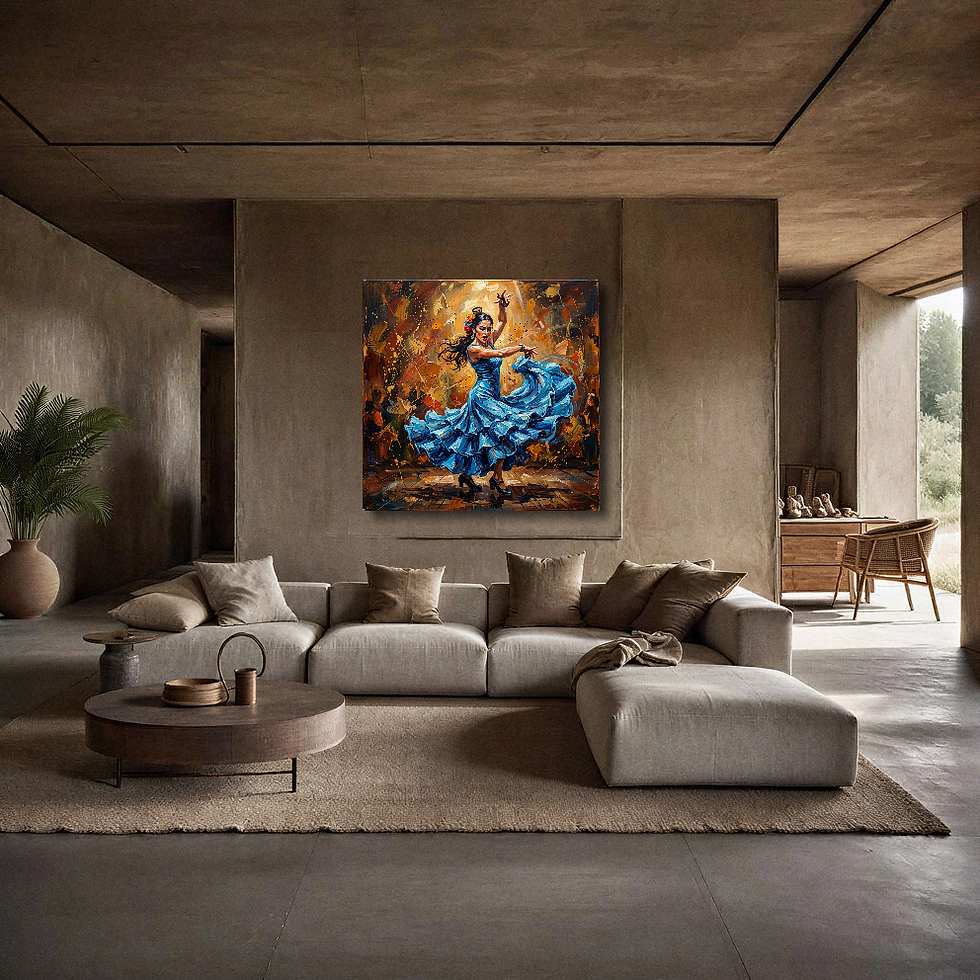
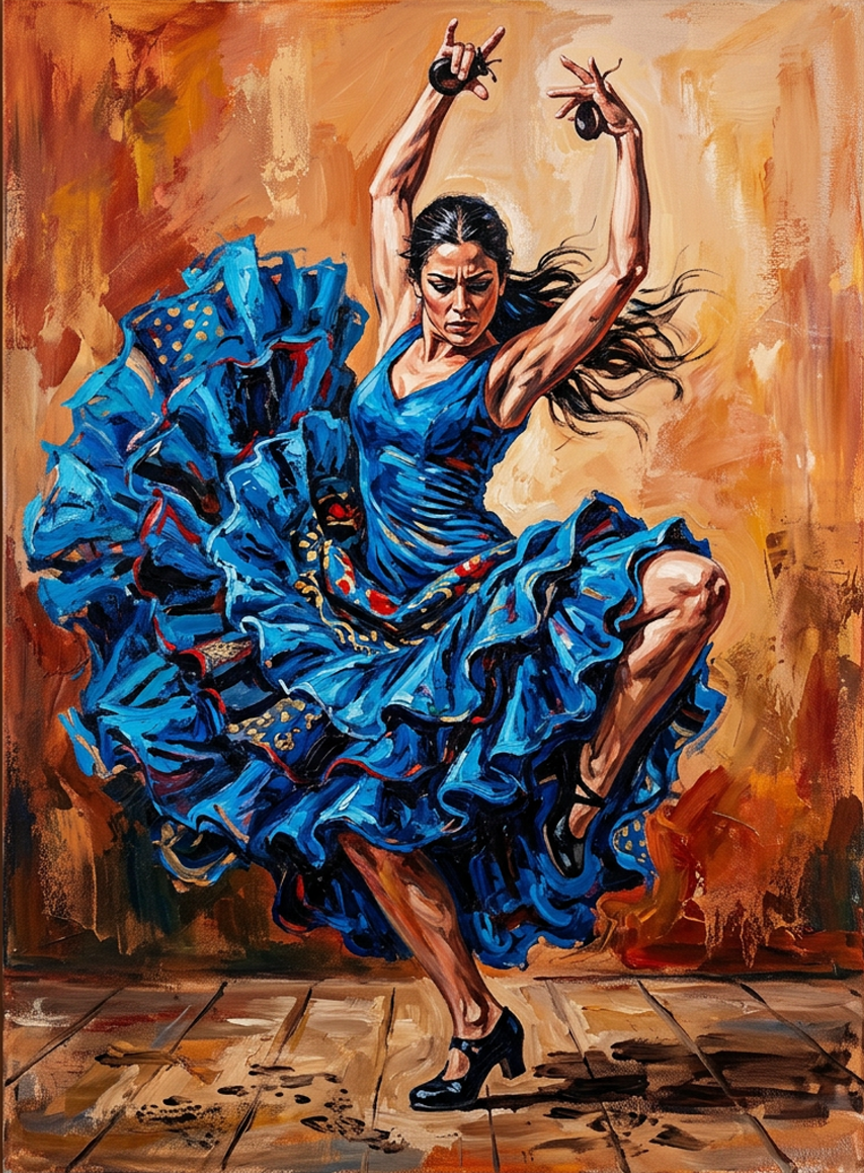
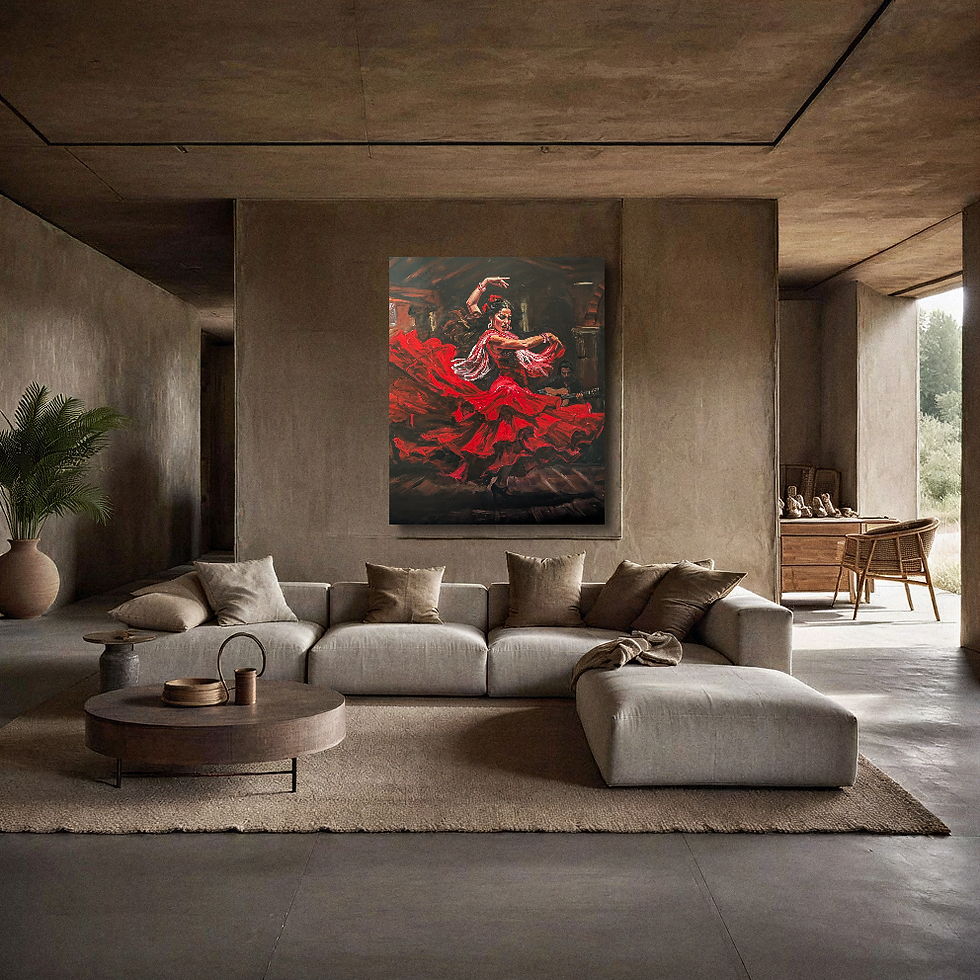
My displayed artworks in this category show the passion, energy and colour that can still be seen today in the Sacromonte Caves Museum.